
Daily Planning: How to Write a Plan You’ll Actually Follow
How can you create a daily plan you’ll actually follow? From prioritisation and time management to building better habits, this article explores a simple and realistic approach to daily planning.

You’ve probably had days when you wake up with a hundred things already running through your mind.
You need to send an important email, exercise, do the grocery shopping, finish something you’ve been putting off for days, read a book, and maybe finally make time to see a friend you haven’t seen in a while.
Then the day begins, one thing leads to another, and suddenly it’s evening. You’re not even quite sure where the time went.
That’s where daily planning can make a real difference.
Not because every minute of the day needs to be filled, and certainly not because we should always be working. A good daily plan should make room for rest, fun, friends, family, reading, and sometimes even doing absolutely nothing.
Planning is really about knowing what you want to do with the time you have.
And perhaps the simplest place to start is with one thing:
Write it down.
I Don’t Have Extra Time Either — I Just Write Things Down

I’ve been writing down my tasks almost every day for years, and whenever I finish something, I tick it off.
Honestly, the satisfaction of ticking something off can be so good that sometimes it feels like a much bigger achievement than it really is.
But I don’t plan just so I can feel or look more organised.
I write things down because I want to know what I’m actually going to do with my day.
That’s why I almost always write tomorrow’s tasks the night before.
Over the years, this simple habit has helped me make time to build a business without automatically pushing exercise, my health, self-care and fun to the bottom of the list.
Cooking, my skincare routine, tidying the house and everyday responsibilities are part of life too.
But at the same time, planning shouldn’t only be about getting more work done.
We need to make room for books, films, friends, learning new things and even occasionally doing nothing at all.
For me, there is one important difference:
When something only exists in my head, it is still a “maybe.”
When I write it down, it becomes a decision.
And very often, everything starts with writing it down.
What Is Daily Planning?
When we think about planning, we often imagine a complicated timetable filled with exact hours and dozens of tasks.
But effective daily planning doesn’t need to be complicated.
At its simplest, it means knowing before the day begins:
- What needs to be done?
- Which tasks matter most?
- What should be done today?
- What can wait until another day?
- How much time do we want to leave for the things that matter outside work?
The goal of a good daily plan isn’t to fill every hour.
It is to make conscious decisions about what deserves your time.
That’s also where time management starts to make more sense.
We cannot create more hours in a day. What we can control is how we choose to use them.
Why Do Most Daily Plans Fail?
Most of us have created an ambitious schedule at some point:
Wake up early.
Exercise.
Eat a healthy breakfast.
Finish all the overdue work.
Study for two hours.
Make a few phone calls.
Tidy the house.
Practise a language.
Watch a film.
And by the end of the day, perhaps half of it is still unfinished.
The problem isn’t always a lack of discipline or motivation.
Often, the problem is that we plan for an imaginary version of ourselves — someone who never gets tired, never gets interrupted and always knows exactly how long everything will take.
Real life doesn’t work that way.
Meetings run late. Something unexpected comes up. Energy levels change. A task that looked like it would take 20 minutes takes an hour.
So the first rule of realistic daily planning is simple:
Plan less, but make it realistic.
1. Get Everything Out of Your Head
One of the most exhausting things we do is try to remember everything at once.
I need to pay that bill.
I need to reply to that message.
I need to send that file.
I need to book an appointment.
I need to buy groceries.
I need to remember that thing at the weekend.
Each unfinished thought takes up a little mental space.
One of the simplest ways to create more personal organisation is to stop keeping everything in your head and put it somewhere else.
Write it on paper, in a planner notebook, in an app, or anywhere you know you will actually check.
The tool itself matters less than the habit.
Your brain should be used for thinking, not for storing an endless to-do list.
2. Choose Three Tasks That Really Matter
If your daily to-do list contains 15 items, chances are they are not all equally important.
Ask yourself:
If I could only complete three things today, which three would matter most?
Those become your main priorities.
Everything else can remain on the list, but it comes second.
This prevents small, urgent-looking tasks from taking over your day while the work that actually moves you forward gets ignored.
This is the heart of prioritisation.
Sometimes being more productive doesn’t mean doing more.
It means doing the right things.
3. Connect Daily Tasks to Bigger Goals
One of the problems with daily planning is that it can quickly become a random list of disconnected tasks:
Shopping.
Emails.
Meetings.
Phone calls.
Exercise.
Tidying up.
But alongside these everyday responsibilities, it helps to ask:
What am I actually moving towards?
This is where goal setting becomes part of your daily plan.
If one of your goals is to learn a new language, it needs a place in your weekly or daily routine.
If you want to improve your health, exercise cannot always be something you do only when there is spare time.
If you want to build a business, some of your time has to be intentionally dedicated to moving it forward.
Goals that never appear in our calendars or plans tend to remain wishes.
4. Think Weekly Before You Think Daily
Planning isn’t only about today.
If we focus exclusively on individual days, it can be easy to lose sight of the bigger picture.
That’s why weekly planning works so well alongside daily planning.
At the beginning of the week, you might ask yourself:
What is the most important thing I want to accomplish this week?
What am I going to do for my health?
Who would I like to spend time with?
What would I like to learn?
Have I left any time for myself?
You can then distribute those things across the week.
Your daily plan stops being a random collection of tasks and becomes part of a bigger direction.
5. Don’t Schedule Every Minute of the Day
One of the most common planning mistakes is assuming every empty hour needs to be filled.
9:00–10:00: Task one.
10:00–11:00: Task two.
11:00–12:00: Meeting.
12:00–13:00: Study.
13:00–14:00: Exercise.
But real life rarely follows a schedule that perfectly.
Leave some space in your day intentionally.
That space can absorb delays, unexpected events, extra rest, or simply a change of mind.
A flexible plan is usually much more useful than a perfect plan that cannot survive real life.
6. Write Down the Small Things Too
It might seem unnecessary to write down things like:
Exercise
Buy fruit
Tidy the bedroom
Skincare
Call a friend
But our lives are not made up only of major projects.
Much of our quality of life comes from small, repeated actions.
This is especially true when it comes to personal development.
The few pages you read each day.
The exercise you do several times a week.
The few minutes you spend planning tomorrow before bed.
These small things are often what eventually create bigger changes.
7. Writing on Paper Can Make Your Plans Feel More Real
For some people, nothing quite replaces writing by hand.
Opening a notebook, writing the date, deciding what matters that day and physically ticking things off can create a simple rhythm.
Writing on paper can also remove some of the distractions that come with checking tasks on a phone filled with notifications and other apps.
-400x300.png)
If writing things down helps you think more clearly, having a structured planner can make the process even easier.
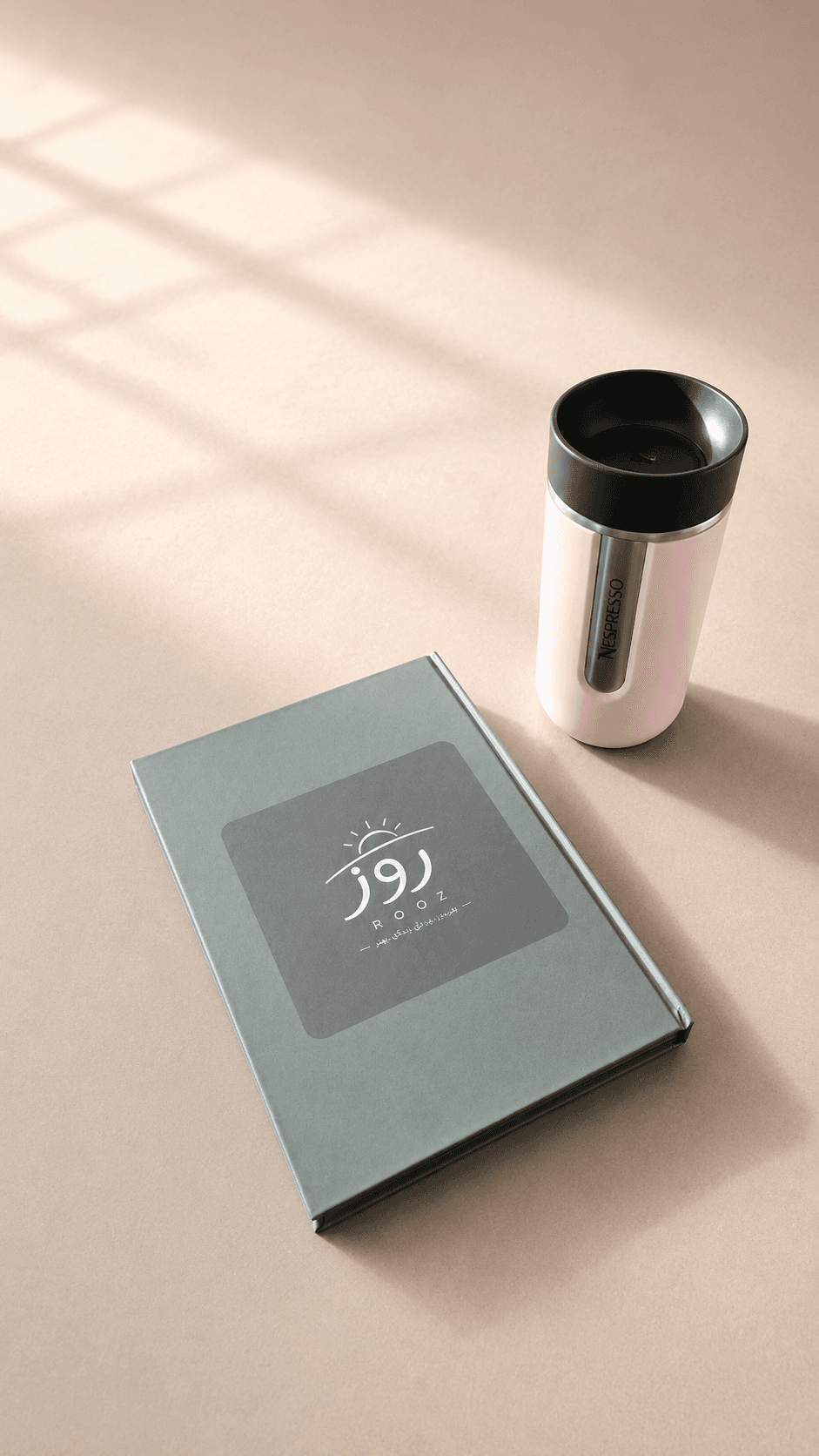
The Rooz Planner Notebook is designed to give your plans, priorities, goals and everyday tasks one clear place to live.
Instead of reinventing your planning system every morning, you have a structure you can return to each day.
8. Use Planning to Build Habits
If something needs to happen regularly, ideally you shouldn’t have to make a brand-new decision about it every time.
That’s where habit building becomes important.
If you want to exercise three times a week, assigning specific days makes it easier.
If you want to read more, you might reserve 20 minutes before bed.
If you want to plan every evening, doing it at roughly the same time helps turn planning itself into a routine.
When an activity has a regular place in your life, it usually requires less mental effort to begin.
Over time, something that once required motivation can become something you simply do.
9. Plan Tomorrow the Night Before
One of the simplest habits you can try is this:
Take a few minutes before bed to write down tomorrow’s plan.
There are two major benefits.
First, when you wake up, you already know where to begin.
Second, you don’t have to spend your first burst of mental energy deciding what you should be doing.
You can keep the structure incredibly simple:
Tomorrow’s Three Main Priorities
Other Tasks
For Me
- Exercise
- Reading
- Rest
- Seeing a friend
- Watching a film
- Anything else that matters to you
That is enough to get started.
10. Tick Things Off
It might sound insignificant, but seeing a tick next to something you’ve completed can feel surprisingly satisfying.
A task stops being:
“I need to do this.”
And becomes:
“Done.”
For me, this is still one of the most enjoyable parts of planning.
And when you look back through previous weeks or months, you begin to notice just how many small things you have completed.
Individually, they might not have looked significant.
Together, they become part of what you have built.
11. If You Prefer Your Phone, Keep Your Plan With You
Not everyone wants to carry a notebook everywhere.
Some people prefer to keep their plans, tasks and reminders on their phone.
The advantage of a planner app is that your plan can stay with you throughout the day. You can check it, change it and add to it whenever you need to.
This can be especially useful if your schedule changes frequently or if you simply prefer managing your day digitally.
-400x300.png)
If digital planning feels more natural to you, the Rooz Planner App brings the same simple idea of planning into something that is always with you.
It gives you one place to capture your tasks, organise your day and remember what actually mattered to you when the day became busy.
12. Unfinished Tasks Aren’t Failures
One of the most important parts of healthy planning is knowing what to do with the tasks you didn’t tick off.
Not everything you write down needs to be completed that day.
Sometimes you planned too much.
Sometimes something more important happened.
Sometimes you were tired.
And sometimes you simply realised the task wasn’t that important after all.
At the end of the day, review what remains and decide:
Should I still do it?
Should I move it to tomorrow?
Should it go into next week?
Or should I remove it completely?
Planning should not become another way to criticise yourself.
It should help you make better decisions.
13. Plan for Your Life, Not Just Your Work
If there is only one idea you remember from this article, perhaps it should be this:
Planning is not only about getting more work done.
If your planner is full of nothing but work, meetings, projects and responsibilities, then something is missing.
A good plan should also make room for the things that improve your life:
Exercise.
Sleep.
Cooking.
Friends.
Family.
Films.
Books.
Travel.
Learning.
Looking after yourself.
And even time when you deliberately do nothing.
The goal of productivity is not to make every one of the 24 hours in a day “productive.”
Real productivity might simply mean using your time and energy in a way that leaves room for the things you genuinely care about.
A Simple Daily Planning Example
Daily planning doesn’t need to be complicated.
For example:
Today’s Three Priorities
- Finish the main project task
- Exercise for 45 minutes
- Call my family
Other Tasks
- Reply to emails
- Buy groceries
- Tidy my desk
- Arrange an appointment
For Me
- Read for 20 minutes
- Watch an episode of my favourite series
At the End of the Day
- What went well today?
- What should I move to tomorrow?
- What am I happy about today?
Just a few lines like these can be the beginning of your own personal planning system.
How Do You Start Daily Planning?
If you have never planned consistently before, you don’t need to create a complicated system tomorrow.
Tonight, simply take a piece of paper, open a notebook or use your planning app.
Write down three things you genuinely want to get done tomorrow.
If there are other important tasks, add them underneath.
And if exercise, reading, seeing a friend or simply resting matters to you, write that down too.
Tomorrow, tick things off as you complete them.
That’s it.
Over time, you’ll start learning how many tasks realistically fit into one of your days, when you have the most energy, which tasks constantly get postponed and what actually matters to you.
Planning is a skill.
Like any skill, it gets better with practice.
You don’t need to be perfect.
You don’t need to complete everything you planned.
You just need to know what you want to do with your day.
Because when something only exists in your head, it is still a “maybe.”
But when you write it down, it becomes a decision.
And sometimes, the biggest changes in our lives begin with decisions that small.
Frequently Asked Questions About Daily Planning
What is the best daily planning method?
The best daily planning method is one you can realistically stick to. A simple approach is to choose three main priorities, add a few secondary tasks, and intentionally leave some free space for unexpected events.
When should I write my daily plan?
For many people, planning the next day the night before works particularly well. It means you already know your priorities when you wake up instead of starting the morning by deciding what to do first.
Is a notebook or a planner app better?
There is no single answer for everyone. If writing by hand helps you focus and think more clearly, a planner notebook might suit you better. If you want your tasks to stay with you and be easy to change throughout the day, a planner app may be more practical.
What should I do if I don’t complete everything on my daily plan?
Review the unfinished tasks and decide whether they should be moved to another day, scheduled for later or removed altogether. An unfinished daily plan does not mean you failed; it may simply mean you planned more than your day could realistically accommodate.
How many tasks should I put on my daily plan?
There is no perfect number, but choosing three main priorities alongside a few smaller tasks is a good place to start. With time, you will become better at estimating how much you can realistically fit into a day.